
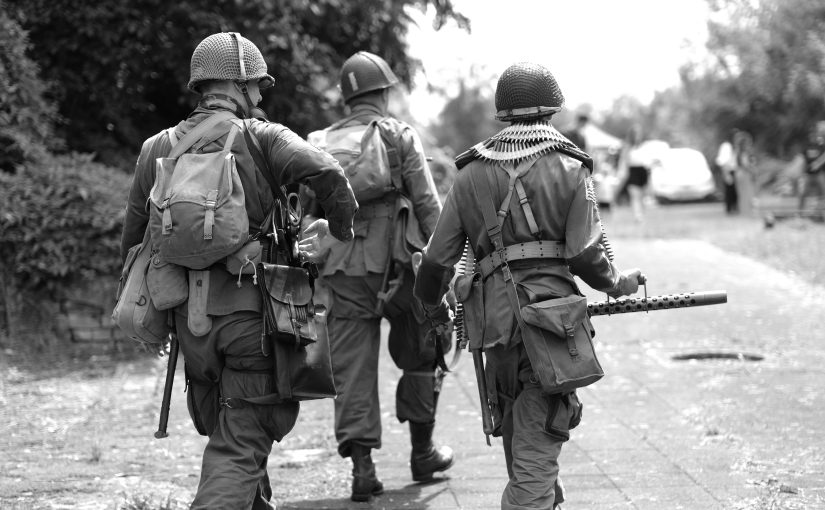
War films have a unique power to show us humanity at its most extreme, both its capacity for brutality and its potential for courage. Here are five films that approach World War II from different angles, each offering something distinct that makes it essential viewing.
Inglourious Bastards (2009)
What it is: Quentin Tarantino’s revisionist World War II fantasy where a squad of Jewish-American soldiers hunts Nazis in occupied France.
Tarantino does what he does best here, takes a familiar genre and explodes it from the inside. This isn’t a realistic war film. It’s a revenge fantasy that asks: what if the oppressed got to rewrite history? Brad Pitt leads a squad of soldiers on a mission to terrorise Nazi officers, and the film balances shocking violence with dark humour in ways only Tarantino can pull off.
The centerpiece is Christoph Waltz as SS Colonel Hans Landa, delivering one of the most chilling villain performances in recent cinema. The opening scene alone, a tense conversation in a French farmhouse, is a masterclass in building dread. Tarantino stretches dialogue scenes to almost unbearable lengths, and it works because the tension is genuine.
This is a film about the power of cinema itself, about storytelling as both weapon and salvation. It’s audacious, sometimes problematic, and utterly entertaining. Not historically accurate, not trying to be, and that’s precisely the point.
Fury (2014)
What it is: A Sherman tank crew’s brutal journey through Germany in the final month of World War II.
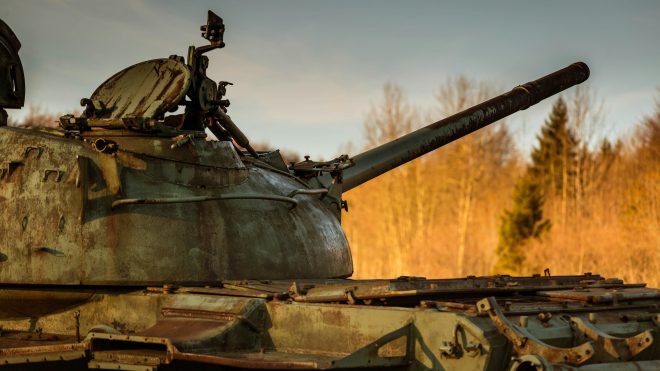
David Ayer strips away any romanticism about tank warfare and shows you what it actually was, five men crammed in a metal box, surrounded by enemies who have better equipment. Brad Pitt plays Wardaddy, a sergeant who’s kept his crew alive through three years of combat, and now they’re stuck with a rookie who’s never seen action.
The film is relentlessly violent and doesn’t pretend war turns anyone into heroes. These men are exhausted, cynical, and compromised. The standout sequence involves the tank crew taking a brief respite in a German apartment, and it’s more uncomfortable than the battle scenes because you watch them struggle to remember how to be human. What makes Fury work is its commitment to showing the moral erosion that comes with sustained combat.
Hacksaw Ridge (2016)
What it is: The true story of Desmond Doss, a conscientious objector who served as a medic and saved 75 men without carrying a weapon.
Mel Gibson directs this story of a man whose religious convictions forbade him from touching a gun, yet who volunteered for combat as a medic. The first half plays almost like a different film, small-town romance, family drama, courtroom tension as Doss fights for the right to serve without a weapon. Then the Battle of Okinawa happens, and Gibson unleashes some of the most visceral combat footage put to film.
Andrew Garfield plays Doss with a sincerity that could have been laughable but instead becomes the film’s anchor. His faith isn’t presented as simple or easy, it’s tested repeatedly, and the film takes seriously his struggle to reconcile his beliefs with the reality of war. The other soldiers’ skepticism feels earned, not manufactured for drama.
The battle sequences are genuinely harrowing. Gibson doesn’t shy away from showing bodies torn apart, and the chaos of combat is rendered with brutal clarity. What keeps it from being torture porn is that every piece of violence serves the story of one man choosing to save lives in the middle of mass death. It’s manipulative, yes, but effectively so.
The Pianist (2002)
What it is: Roman Polanski’s account of Polish-Jewish pianist Władysław Szpilman’s survival in Nazi-occupied Warsaw.
This is one of the most devastating Holocaust films ever made, and it achieves that impact through restraint rather than manipulation. Adrien Brody plays Szpilman, and he won the Oscar by embodying a man slowly stripped of everything, family, home, profession, dignity, until survival becomes the only thing left.
Polanski directs with the knowledge of someone who lived through similar horrors as a child. The film shows you the gradual process by which a civilized society becomes a nightmare. Rights disappear incrementally. Walls go up. People vanish. The horror isn’t presented in one shocking moment but accumulated over two and a half hours until it becomes almost unbearable.
What sets The Pianist apart is its focus on one man’s isolation. Szpilman spends much of the film hiding alone in ruined buildings, and Brody conveys his deterioration with minimal dialogue. The film trusts you to sit with that loneliness, that fear. There’s a scene late in the film where a German officer discovers Szpilman, and what happens next is one of the most quietly powerful moments in war cinema.
Dunkirk (2017)
What it is: Christopher Nolan’s experimental take on the 1940 evacuation of Allied soldiers from a French beach.
Nolan strips war down to its essence: survival. There’s minimal dialogue, no backstory for characters, no scenes of generals planning strategy. Just soldiers trapped on a beach, pilots in the air, and civilians in boats trying to reach them. The film operates on pure visceral tension for 106 minutes.
The structure is unconventional, three timelines running simultaneously at different speeds, all converging on the same moment. It’s the kind of formal experiment that could be alienating, but Nolan makes it work by keeping the focus on immediate, physical danger. You’re never confused about what’s at stake, even if you’re not always sure where you are in time.
What’s striking about Dunkirk is how little it resembles a traditional war film. There’s no glory here, no speeches about duty. Just exhausted men trying to get home, and the overwhelming odds against them. Tom Hardy spends most of the film behind a Spitfire mask. Mark Rylance plays a civilian boat captain with quiet determination. The young soldiers on the beach are barely characterized, which is the point, they’re all just trying to survive.
This is war as chaos and fear and the desperate hope that someone will save you. It’s not a film about heroism so much as endurance. And it makes you understand why Dunkirk was seen as both a disaster and a miracle.
Why These Five?
Each film represents a different approach to depicting war. Tarantino gives you fantasy and revenge. Ayer shows you the moral cost of combat. Gibson focuses on faith under fire. Polanski captures survival and isolation. Nolan strips everything down to pure experience.
Together, they demonstrate that war films don’t have to follow one template. They can be character studies, formal experiments, revenge fantasies, or meditations on suffering. What they share is a commitment to showing you something true about how people behave when everything is at stake.
Watch them not just for the spectacle, but for what they reveal about courage, cowardice, faith, desperation, and the thousand ways people respond when civilization collapses around them.

Proudly powered by WordPress
Discover more from The Ravi Kirthy Blog
Subscribe to get the latest posts sent to your email.
