
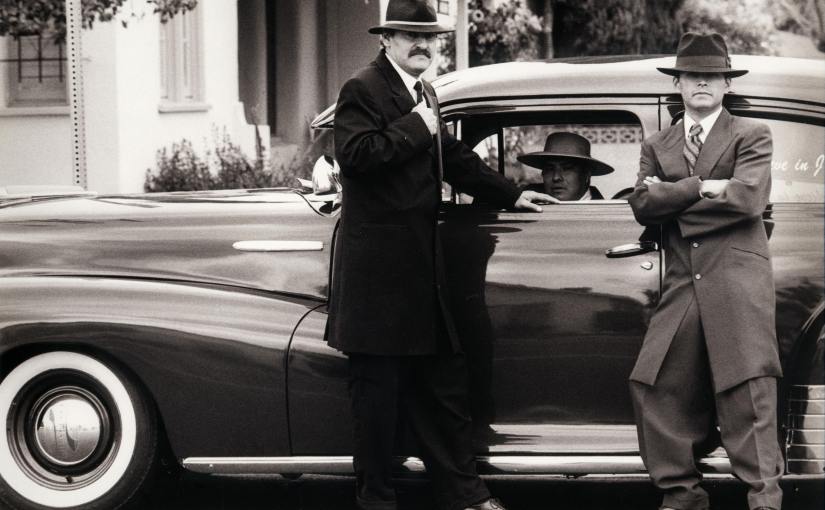
Mafia movies represent some of cinema’s finest achievements. These films explore power, loyalty, betrayal, and the American Dream’s dark underbelly through stories of organised crime. From Francis Ford Coppola’s epic sagas to Martin Scorsese’s visceral portraits of mob life, gangster films have given us unforgettable characters, quotable dialogue, and insights into a shadowy world most of us will never experience.
Whether you’re a longtime fan of crime cinema or discovering these films for the first time, this comprehensive guide covers the ten essential mafia movies that define the genre.
1. The Godfather (1972) & The Godfather: Part II (1974)
The Greatest Mafia Films Ever Made
Francis Ford Coppola’s The Godfather isn’t just the best mafia movie; it’s regularly cited as one of the greatest films in cinema history. Adapted from Mario Puzo’s novel, it follows Michael Corleone (Al Pacino), a war hero who wants nothing to do with his family’s criminal empire but gradually transforms into its most ruthless leader.
The film works on every level. Marlon Brando’s Vito Corleone is iconic, the raspy voice, the cat in the opening scene, the cotton balls in his cheeks during rehearsals that became part of the character. Pacino’s transformation from idealistic outsider to cold-eyed don is a master class in subtle acting. Gordon Willis’s cinematography creates a world of shadows and power. Nino Rota’s score is instantly recognisable.
The Godfather: Part II does something almost impossible, it matches and arguably surpasses the original. The film intercuts Michael’s consolidation of power in the 1950s with flashbacks to young Vito (Robert De Niro) building the Corleone empire in early 1900s New York. It’s a meditation on how power corrupts and the price of pursuing the American Dream through crime.
Why They’re Essential: These films elevated the gangster genre from pulp entertainment to serious art. The final shot of Part II, Michael sitting alone, having gained everything and lost everyone, is one of cinema’s most devastating images.
2. Goodfellas (1990)
Scorsese’s Definitive Mob Film
Martin Scorsese’s Goodfellas takes everything The Godfather made mythic and brings it down to street level. Based on Nicholas Pileggi’s book about real-life mobster Henry Hill (Ray Liotta), the film follows Hill’s rise through the ranks of a Brooklyn crime family and his eventual fall.
What makes Goodfellas revolutionary is its energy and perspective. Scorsese shoots it like a fever dream, tracking shots that go on for minutes, needle drops that define scenes, freeze frames that punctuate violence. The famous Copacabana sequence, where the camera follows Henry and Karen through the club’s back entrance in one unbroken take, is filmmaking at its most exhilarating.
The performances are legendary. Liotta narrates with the enthusiasm of someone who loved life even as it destroyed him. Robert De Niro plays Jimmy Conway as a charming psychopath. Joe Pesci won an Oscar for Tommy DeVito, making him terrifying and pathetic simultaneously. The “funny how?” scene is one of cinema’s most tense improvisations.
3. The Departed (2006)
Scorsese’s Oscar-Winning Boston Crime Epic
Martin Scorsese finally won his Best Director Oscar for The Departed, an adaptation of the Hong Kong film Infernal Affairs that transplants the story to Boston’s Irish mob. Leonardo DiCaprio plays Billy Costigan, an undercover cop infiltrating crime boss Frank Costello’s (Jack Nicholson) organisation. Simultaneously, Colin Sullivan (Matt Damon) is a mobster’s mole inside the police department.
The film is Scorsese’s most entertaining work, fast-paced, violent, and filled with great performances. Nicholson clearly relishes playing Costello as a theatrical monster, someone who performs evil rather than just committing it. DiCaprio and Damon are perfectly cast as mirror images, both trapped in roles they can’t escape.
What elevates The Departed beyond a standard crime thriller is how it explores identity and performance. Both protagonists are living lies so completely that they’re losing track of who they really are. The film’s violence is sudden and shocking, particularly its grim ending that refuses to provide catharsis.
4. Casino (1995)
Scorsese’s Epic About Vegas and Greed
Martin Scorsese reunited with Goodfellas screenwriter Nicholas Pileggi and stars Robert De Niro and Joe Pesci for Casino, a sprawling look at how the mob controlled Las Vegas casinos in the 1970s and early ’80s before corporate America took over.
De Niro plays Sam “Ace” Rothstein, a handicapper tasked with running the Tangiers casino for the Chicago outfit. Pesci is Nicky Santoro, a violent enforcer sent to protect Ace, who instead brings heat down on everyone. Sharon Stone earned an Oscar nomination as Ginger, Ace’s hustler wife whose addictions destroy their marriage.
At nearly three hours, Casino is exhaustive and exhausting. Scorsese shows you every detail of how casinos operated, how money moved, and how violence enforced silence. The film is about systems, both the complex machinery of running a casino and the mob’s organisational structure, and how human weakness (greed, ego, addiction) brings systems crashing down.
The violence in Casino is more brutal than in Goodfellas. The cornfield baseball bat beating, the head-in-a-vice scene, and Pesci’s final fate are genuinely hard to watch. Scorsese doesn’t glamorise any of it—this is violence as business, efficient and horrible.
5. Once Upon a Time in America (1984)
Sergio Leone’s Epic Meditation on Time and Friendship
Sergio Leone’s final film is a four-hour (in its complete version) gangster epic following Jewish mobsters David “Noodles” Aaronson (Robert De Niro) and Max (James Woods) from childhood in 1920s New York through Prohibition and beyond. The film jumps between time periods, gradually revealing how friendship and betrayal shaped these men’s lives.
Once Upon a Time in America is less a traditional mafia movie than a dreamlike meditation on memory, regret, and the past. Leone shoots it like an opera, long takes, deliberate pacing, Ennio Morricone’s haunting score. The film takes its time because it’s about how time changes people and how memory distorts events.
The violence is shocking but sparse. What haunts the film is sadness, Noodles’ realisation of how his choices destroyed everything he valued. The ambiguous ending asks whether redemption is possible or if some betrayals are permanent.
6. Donnie Brasco (1997)
The Undercover Story with Real Stakes
Mike Newell’s Donnie Brasco tells the true story of FBI agent Joe Pistone (Johnny Depp), who spent six years undercover infiltrating the Bonanno crime family. His relationship with ageing mobster Lefty Ruggiero (Al Pacino) forms the film’s emotional core, a genuine friendship built on a lie that will eventually destroy Lefty.
What separates Donnie Brasco from other undercover cop films is how it focuses on the personal cost of deception. Pistone becomes so embedded in mob life that he starts losing himself. His marriage suffers, his children barely know him, and his friendship with Lefty creates moral complications the FBI didn’t prepare him for.
Pacino gives one of his most vulnerable performances as Lefty, a low-level wiseguy who’s been passed over for promotion his entire career. His friendship with “Donnie” gives him status and companionship, which makes the inevitable betrayal heartbreaking. When Lefty realises Donnie is FBI, Pacino’s face communicates everything about loyalty, friendship, and knowing you’re about to die.
Why It Stands Out: Most mafia movies are about men at the top of criminal organisations. Donnie Brasco shows the bottom, guys who’ll never be made, who do the dirty work, who get killed when things go wrong. It’s a more honest portrait of mob life than films that focus on bosses.

7. The Irishman (2019)
Scorsese’s Reflective Mob Epic
Martin Scorsese reunited his Goodfellas and Casino stars, Robert De Niro, Al Pacino, and Joe Pesci, for this sprawling, melancholy examination of mob life and mortality. Based on Charles Brandt’s book, the film follows Frank Sheeran (De Niro), a hitman who claims to have killed Jimmy Hoffa (Pacino).
At three and a half hours, The Irishman tests patience. It’s deliberately paced, using digital de-ageing to show these men across decades. But the length serves a purpose; this is Scorsese and his ageing actors reflecting on careers spent glamorising violence. The film asks what it all meant and answers: not much.
Unlike Goodfellas‘ kinetic energy, The Irishman is elegiac. These men are old, their friends are dead, and no one remembers or cares about their exploits. The final act, showing Frank alone in a nursing home, forgotten by history, is devastating. Pesci came out of retirement for this, and his quiet performance as Russell Bufalino is the film’s anchor.
8. A Bronx Tale (1993)
Coming-of-Age in the Shadow of the Mob
Robert De Niro’s directorial debut tells Chazz Palminteri’s autobiographical story about a boy named Calogero growing up in the 1960s Bronx, torn between his honest bus driver father (De Niro) and local mob boss Sonny (Palminteri). It’s a mafia movie that’s really about masculinity, mentorship, and choosing your path.
Unlike films that romanticise mob life, A Bronx Tale shows both its appeal and its costs. Sonny is charismatic, generous to his neighbourhood, and genuinely cares about Calogero. But he’s also a killer whose business is exploitation. The film doesn’t pretend there’s an easy answer to which role model Calogero should follow.
Palminteri’s script (adapted from his one-man play) captures the rhythms of Italian-American working-class life. The film’s message about wasted talent (the saddest thing in life is wasted talent) resonates because both paths offer versions of that waste.
9. The Untouchables (1987)
Brian De Palma’s Stylish Prohibition Thriller
Brian De Palma’s take on the Eliot Ness story is less historically accurate than gloriously entertaining. Kevin Costner plays the idealistic federal agent assembling an incorruptible team to bring down Al Capone (Robert De Niro) during Prohibition. Sean Connery won an Oscar as Irish cop Jimmy Malone, who teaches Ness that fighting criminals requires bending rules.
De Palma shoots The Untouchables like an opera. The Union Station shootout, with a baby carriage bouncing down stairs in slow motion while guns blaze, is pure cinematic bravado. Ennio Morricone’s score elevates every scene. De Niro’s Capone is theatrical and terrifying, watch him beat a man to death with a baseball bat during dinner.
The film is fundamentally about morality and corruption. Ness starts believing justice can be won through legal means, but Malone teaches him the Chicago way: “He pulls a knife, you pull a gun. He sends one of yours to the hospital, you send one of his to the morgue.” The film questions whether you can fight evil without becoming evil.
10. Scarface (1983)
Tony Montana’s Rise and Fall
While technically not about the Italian-American mafia, Brian De Palma’s Scarface deserves inclusion as one of the most influential gangster films ever made. Al Pacino plays Tony Montana, a Cuban refugee who builds a cocaine empire in 1980s Miami through violence and ambition before paranoia destroys him.
Scarface is deliberately excessive: the violence, the profanity (over 200 F-words), the cocaine-fueled delusions, the mansion full of gaudy opulence. Tony Montana represents the American Dream taken to its logical extreme: success measured purely by wealth and power, with no moral constraints.
Pacino gives one of his biggest performances, and “biggest” here means BIGGEST. Every line is delivered with maximum intensity. “Say hello to my little friend” before the climactic shootout became one of cinema’s most quoted moments. Tony’s downfall isn’t sympathetic; he betrays everyone, murders his best friend, and destroys his sister’s life, but it’s spectacular.
11. Heat: The Ultimate Crime Epic
Michael Mann’s 1995 masterpiece Heat stands as one of cinema’s greatest crime dramas, delivering a sophisticated cat-and-mouse thriller that elevated the genre to operatic heights. Al Pacino and Robert De Niro, two of Hollywood’s most legendary actors, finally share significant screen time as LAPD detective Vincent Hanna and master thief Neil McCauley, two men on opposite sides of the law who share an almost spiritual understanding of each other’s dedication and loneliness. The film’s brilliance lies not in explosive action sequences (though the downtown Los Angeles bank heist shootout remains one of cinema’s most visceral gun battles), but in its meditation on obsession, professionalism, and the prices we pay for choosing careers over human connection.
What makes Heat endlessly rewatchable is Mann’s meticulous attention to detail and his refusal to paint either protagonist as purely heroic or villainous. Both men are prisoners of their callings, Hanna’s third marriage crumbles under the weight of his relentless pursuit of criminals, whilst McCauley’s ironclad rule of maintaining no attachments he can’t walk away from in thirty seconds proves devastating when he finally allows himself to love. The iconic coffee shop scene, where hunter and prey sit across from each other discussing their mutual respect and inevitable confrontation, crackles with tension and philosophical weight. Mann doesn’t glorify crime or law enforcement; instead, he explores how both paths demand everything from those who walk them, often leaving behind emotional wreckage and profound isolation.
12. Pulp Fiction: Revolutionary Cinema
Quentin Tarantino’s Pulp Fiction didn’t just revitalise independent cinema in 1994; it fundamentally altered how stories could be told on screen. With its non-linear narrative structure, razor-sharp dialogue, and ensemble cast delivering career-defining performances, the film became a cultural phenomenon that continues to influence filmmakers three decades later. John Travolta’s Vincent Vega and Samuel L. Jackson’s Jules Winnfield transformed the hitman archetype into something far more interesting: philosophical working men who discuss the deeper meanings of divine intervention and the finer points of French cuisine between assignments. The film’s fragmented timeline, which jumps between different characters and moments, creates a puzzle that rewards multiple viewings, revealing new connections and deeper meanings with each experience.
Beyond its stylistic innovations, Pulp Fiction succeeds because Tarantino treats his criminals, boxers, and mob wives as fully realised human beings rather than genre archetypes. Bruce Willis’s boxer Butch Coolidge demonstrates unexpected honour and courage, Uma Thurman’s Mia Wallace reveals vulnerability beneath her cool sophistication, and Jackson’s Jules undergoes a genuine spiritual awakening that leads him to reconsider his violent profession. The film balances shocking violence with genuine humour, pop culture references with literary ambition, and cynicism with surprising moments of redemption. Tarantino’s gift for dialogue transforms seemingly mundane conversations into riveting cinema, whether characters are debating the significance of foot massages or navigating the awkward aftermath of accidentally shooting someone in the face. Pulp Fiction proved that genre films could be artistically ambitious, commercially successful, and endlessly quotable all at once.
13. American Made: Tom Cruise’s Reckless Adventure
Doug Liman’s American Made reunites the director with Tom Cruise (following their collaboration on Edge of Tomorrow) for a wildly entertaining, based-on-truth tale of Barry Seal, a TWA pilot recruited by the CIA who ends up working for both American intelligence and Colombian drug cartels. Cruise delivers one of his most charismatic, roguish performances as Seal, a man whose appetite for risk and profit leads him into increasingly absurd and dangerous situations. The film captures the stranger-than-fiction reality of 1980s covert operations, where the lines between legal government work and criminal enterprise blurred beyond recognition, and one enterprising pilot could find himself at the centre of international intrigue.
What elevates American Made beyond a standard crime biopic is its energetic pacing, Cruise’s magnetic performance, and Liman’s playful directorial approach that matches Seal’s own devil-may-care attitude. The film doesn’t glorify Seal’s actions but rather presents him as an opportunist caught up in forces far larger than himself, trying to juggle CIA missions, drug smuggling, gunrunning, and family life with increasingly comedic desperation. Cruise captures Seal’s infectious enthusiasm and adaptability; this is a man who responds to every impossible situation by figuring out how to make it work and turn a profit. It’s vintage Cruise doing what he does best: playing a charming rogue who flies by the seat of his pants, quite literally.
Frequently Asked Questions About Mafia Movies
- What is the best mafia movie ever made? The Godfather is generally considered the greatest, though Goodfellas has equally passionate defenders. Both are masterpieces that approach the genre in distinct ways.
- Are mafia movies based on true stories? Many are based on real events or people. Goodfellas, Casino, Donnie Brasco, The Irishman, and The Untouchables all draw from historical figures and events, though they take dramatic liberties.
- Why are there so many Italian-American mafia movies? The Italian-American Mafia (La Cosa Nostra) dominated organised crime in major American cities for decades, creating compelling stories about immigration, assimilation, and the pursuit of power. These films also explore specifically Italian-American experiences.
- Where can I watch classic mafia movies online? Most are available on major streaming services like Netflix, Paramount+, Hulu, and Amazon Prime Video, or can be rented on Apple TV and Fandango at Home. Check JustWatch for current availability.
- What makes a great mafia movie? The best combine compelling characters, strong performances, excellent direction, and thematic depth. They use crime stories to explore larger questions about power, morality, family, and American culture.
Related Searches: best mafia movies, top gangster films, where to watch mafia movies, classic crime movies, Italian-American mob films, Scorsese gangster movies, organised crime films, best mob movies on Netflix, mafia movie streaming, greatest crime films ever made, Al Pacino gangster movies, Robert De Niro mob films


Discover more from The Ravi Kirthy Blog
Subscribe to get the latest posts sent to your email.
